
Legislative History of Law N° 20.930
Law N° 20.930, which establishes the conservation right (derecho real de conservación), was published in the Official Gazette (Diario Oficial) on June 25, 2016. Its final text is not the bill with which the legislative process began: in the Senate almost all of its articles were replaced, and the conservation easement became a new real right.
Commemorative series · 10 years of Law N° 20.930
Commemorative Series of Bulletins and Talks: 10 Years of the Conservation Right
This history is developed in Bulletin 1 of the series: five bulletins of the Conservation Law Center (Fundación Centro de Derecho de Conservación) and five talks on the YouTube channel @todospuedenconservar, every Tuesday from November 10 to December 8, 2026.
Timeline
-
2003Doctrinal proposalFirst use of the name “derecho real de conservación”. Revista de Derecho Ambiental, Universidad de Chile.
-
2008Motion in the ChamberInspired by conservation easements: a limitation to the right of ownership or charge, with no object of its own.
-
2012The Chamber approves and sends it to the SenateStill a charge or easement, with a maximum duration of 40 years.
-
2014–16Senate: new textAn affirmative real right with its own object, following the indications of the Conservation Law Center.
-
2016Law N° 20.930Published in the Official Gazette on June 25, 2016.
-
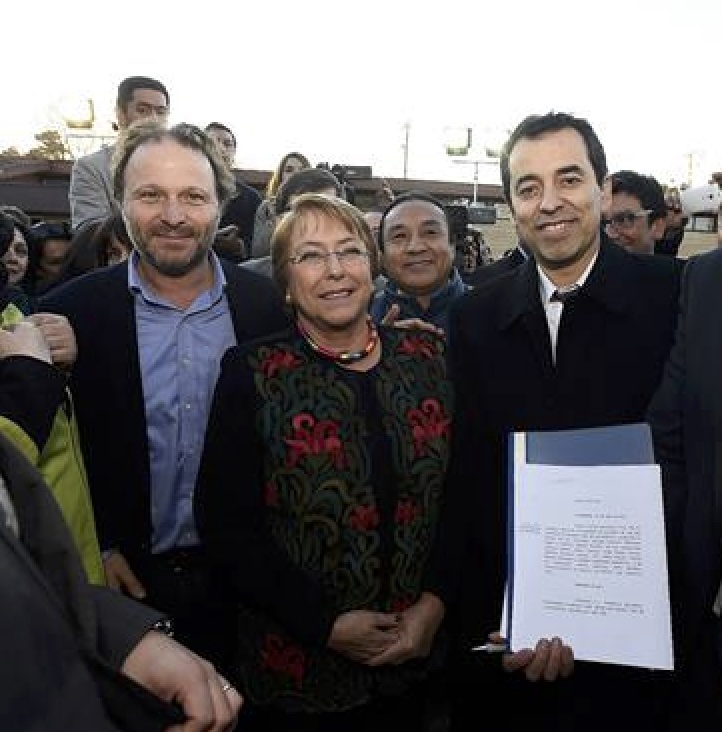
2016First private conservation rightEcoaldea La Bella, Linares.
-
2018First public conservation rightHacienda El Durazno, in favor of CONAF.
-
2023Law N° 21.600Creates the SBAP and incorporates the conservation right.
-
2026Ten yearsOf Law N° 20.930: commemorative series of bulletins and talks.
The original bill (Bulletin No. 5823-07) was submitted to the Chamber of Deputies on April 17, 2008. The Chamber approved it and sent it to the Senate on August 13, 2012 (Official Letter No. 10321): that text still conceived the right as a charge or easement, with a maximum duration of 40 years. In the Senate, Dr. Jaime Ubilla drafted the definitive articles of Law N° 20.930 through ‘indications’ (draft change proposals) submitted to the legislative committees, as Executive Director of the Conservation Law Center (2014, 2015 and 2016). Congress approved the law in May 2016.
From easement to an affirmative real right
- Parliamentary motion inspired by the conservation easements of the United States.
- A limitation to the right of ownership or a charge on the property.
- No object of its own.
- Duration: minimum 20 years in the motion (2008); maximum 40 years in the bill the Chamber sent to the Senate (2012).
- Titleholders limited to registered organizations (guarantors or custodians). (Motion 2008: only certain legal persons; Chamber bill 2012: environmental corporations and foundations, research centers and universities.)
- An affirmative real right: the faculty to conserve.
- Its own object: ecosystem assets, the attributes or functions of the environmental patrimony.
- Duration that may be indefinite.
- Broad titleholder category: natural or legal persons, public or private, for-profit or not-for-profit. Everyone can conserve.
Four legislative stages, four definitions
The definition in Article 2 changed in substance during the legislative process (Bulletin No. 5823-07): stages (1) and (2) define the right by the charges borne by the right of ownership; stages (3) and (4) define it as a faculty to conserve and qualify its attributes or functions as immovable property.
| Stage | Definition (art. 2, first paragraph) and qualification of the attributes or functions as immovable property (art. 3) |
|---|---|
| (1) Parliamentary motionChamber of Deputies · April 17, 2008 | “The conservation right consists of a limitation to the right of ownership over a property, which is voluntarily established to contribute to conserving the environment, for the benefit of the community as a whole, whose exercise and protection are specially granted to a specific legal entity as titleholder, and by which certain charges are imposed on the encumbered real estate.” |
| (2) Bill approved by the ChamberOfficial Letter No. 10321 · August 13, 2012 | “The conservation right is constituted voluntarily by the owner of a property over that same property, by which one or more of the charges indicated in Article 7 are established, for the benefit of the conservation of the environmental patrimony in accordance with applicable regulations, and whose exercise is specially granted to a specific legal entity.” |
| (3) Indications of the Conservation Law CenterSenate · June 9, 2014 | “The conservation right is that which consists in the faculty to conserve the environmental patrimony of a property or of certain attributes or functions of such environmental patrimony, and which is established voluntarily by the owner, for the benefit of a determined legal entity.”Art. 3, text proposed by the CDDC: “For the purposes of this law, the attributes or functions of the environmental patrimony of the property will be considered immovable property.” |
| (4) Law N° 20.930Official Gazette · June 25, 2016 | “The conservation right is a real right that consists in the faculty to conserve the environmental patrimony of a property or of certain attributes or functions thereof. This right is constituted freely and voluntarily by the owner of the property for the benefit of a determined natural or legal person.”Art. 3, third paragraph: “For the purposes of this law, the attributes or functions of the environmental patrimony of the property will be considered immovable property.” |
Comparative table
| Element | (1) Motion 2008 | (2) Chamber 2012 | (3) CDDC indications 2014–2015 | (4) Law 20.930 |
|---|---|---|---|---|
| Nature | Limitation to the right of ownership | Right that establishes charges | Faculty to conserve | Faculty to conserve |
| Object | The immovable property | The encumbered property | The environmental patrimony of a property or certain attributes or functions of this patrimony | The environmental patrimony of a property or certain attributes or functions of this patrimony |
| Attributes or functions as immovable property | No | No | Yes | Yes (art. 3, para. 3) |
| Constitution | Voluntary | Voluntary, by the owner | Voluntary, by the owner of the property | Free and voluntary, by the owner of the property |
| Beneficiary | The community as a whole | The conservation of the environmental patrimony | Determined natural or legal person | Determined natural or legal person |
| Titleholders | Only certain legal persons | Environmental corporations and foundations, research centers and universities | Broad titleholder category (2015 proposal) | Any natural or legal person, public or private |
| Duration | Minimum 20 years; may be perpetual | Minimum 15, maximum 40 years | No maximum limit; may be perpetual | Indefinite, unless otherwise agreed |
| Eligible immovable property | Real estate | “Privately owned” | Any immovable property | Any immovable property |
| Scope | Protected areas | Protected areas | All types of conservation projects | All types of conservation projects |
| Model | Conservation easement / easement | Conservation easement / charge | Autonomous real right (affirmative right) | Autonomous real right (affirmative right) |
In green, the elements in which Law N° 20.930 (4) reproduces the indications of the Conservation Law Center (3). Source: Bulletin 1 of the commemorative series, with references to the Historia de la Ley N° 20.930 [Legislative History of Law N° 20.930] (Library of the National Congress of Chile).
Milestones in pictures

Conclusions
- The name “conservation right” (derecho real de conservación). The 2008 motion used the name “derecho real de conservación” for what, in its structure, was a conservation easement inspired by the North American conservation easement. The name was used for the first time in Dr. Jaime Ubilla’s 2003 article, which proposed an autonomous, affirmative real right, distinct from the easement. The affirmative formulation —“faculty to conserve” and “attributes or functions of the environmental patrimony”— was developed in his doctoral research (2011–2015) and reached the law through the indications of 2014 and 2015.
- The legal definition (Articles 2 and 3). The definition and the articles finally approved are those proposed in the Bulletins of the Conservation Law Center. Its two elements —the faculty to conserve and ecosystem assets (the attributes or functions of the environmental patrimony, legally deemed immovable property)— were established in the Senate; they were present neither in the motion nor in the bill approved by the Chamber.
- The articles of the Law. The new definition entailed the replacement of 100% of the articles approved by the Chamber of Deputies: of its sixteen articles, only Article 1, which establishes Law N° 19.300 and the Civil Code as supplementary rules, kept its original wording.
Who can be a titleholder
The law allows the titleholder to be any natural or legal person, public or private, for-profit or not-for-profit.
The titleholder may be a person, an entity or a group of persons or entities. But the spirit of the law is that the titleholder has a direct interest in conservation: those who know the territory, have a direct bond of affection with it and can pass that affection on to new generations. The guarantee comes from that direct interest; an external audit can then be added.
Further reading
- Ubilla, J. (2026). “A Brief Legislative History of the Conservation Right”. Bulletin 1 of the commemorative series, Conservation Law Center.
- Ubilla, J. (2023). “The conservation right in light of the legislative history of Law N° 20.930”. Revista de Derecho (Coquimbo) 30, e5232.
- Historia de la Ley N° 20.930 [Legislative History of Law N° 20.930], Library of the National Congress of Chile.
- The Conservation Right · Versión en español
Want to see how it is applied? See the cases of UB Conservación or learn about the CR Compliance Audit & Seal.